If you need CPR certification in Concord, NH, the path is simple. First, confirm which course your job or situation calls for: CPR/AED, first aid, or BLS for healthcare providers. Then take a hands-on class with a certified instructor, either fully in person or as blended learning with a skills session. Practice the skills, pass the check, and you'll receive a card that is typically valid for two years. You can see current sessions on our classes page.
The rest of this guide covers who needs certification, how to choose a course, what happens in class, and how to stay current.
Who Needs CPR Certification Around Concord
Concord is the state capital, and many people who live in or commute to the area work in jobs where CPR training is expected or required. Others take a class because they want to be ready for family, friends and neighbors.
People who often need a current card include:
- Healthcare workers. Nurses, medical assistants, dental staff, EMTs and students in clinical programs usually need BLS.
- Childcare providers and educators. Daycare staff, preschool teachers, school employees and camp counselors are commonly asked for CPR and first aid.
- Coaches and fitness professionals. Youth sports coaches, personal trainers and lifeguards often need certification to work.
- Workplace responders. Many offices, warehouses, construction sites and manufacturers designate employees to respond to emergencies.
- Parents, grandparents and caregivers. No employer requires it, but being prepared for a choking baby or a collapsed relative matters.
If you live in nearby towns like Bow, Hopkinton, Pembroke, Loudon, Boscawen or Canterbury, the same guidance applies. The key question is not where you live but what your employer, school or licensing body will accept.
CPR Certification in Concord, NH: Which Course Do You Need?
The most common mistake people make is booking the wrong class. A general CPR/AED card may not satisfy a hospital, and a BLS card may be more than a parent needs. Before you register, ask your employer or program coordinator exactly what they require, including whether a specific certifying organization is named.
Here is a quick comparison of the main course types:
| Course | Who it's for | What it covers |
|---|---|---|
| CPR/AED (adult, child, infant) | Workplace responders, teachers, coaches, parents, general public | Recognizing cardiac arrest, chest compressions, rescue breaths, using an AED, choking relief |
| First Aid | Childcare staff, workplace responders, camp and school staff | Bleeding control, burns, allergic reactions, seizures, sudden illness, injuries |
| CPR/AED + First Aid | Many childcare, school and workplace roles | Both of the above in one combined class |
| BLS (Basic Life Support) | Nurses, EMTs, dental and medical staff, healthcare students | High-quality CPR for all ages, team-based resuscitation, bag-mask ventilation, AED use |
A few tips for choosing:
- Check the exact wording. If your job posting says "BLS," a standard CPR/AED class will likely not count.
- Ask about first aid. Childcare and school roles frequently want CPR and first aid together.
- Confirm the certifying organization. Some employers accept more than one; others name a specific provider. Our course listings show what each class includes so you can match it.
In-Person vs. Blended Learning
There are two common ways to earn a recognized card.
Fully in-person classes cover everything in one session. You watch, practice and test with an instructor in the room. This works well for people who learn best by doing, or who want to ask questions as they go.
Blended learning splits the course in two. You complete the knowledge portion online at your own pace, then attend a shorter in-person skills session to practice and be tested on a manikin. This suits busy schedules, shift workers and anyone who prefers reading and video before hands-on time.
What about fully online courses with no skills check? Be careful. Many employers, licensing boards and workplace safety programs require a hands-on skills evaluation. CPR is a physical skill, and an instructor needs to see that your compressions are deep enough and fast enough. If a course never puts your hands on a manikin, check with your employer before paying for it.
What to Expect in Class
If you have never taken a CPR class, it's normal to feel a little nervous. Most people leave feeling more confident than they expected.
A typical class includes:
- Short video or instructor-led segments explaining when and why to act.
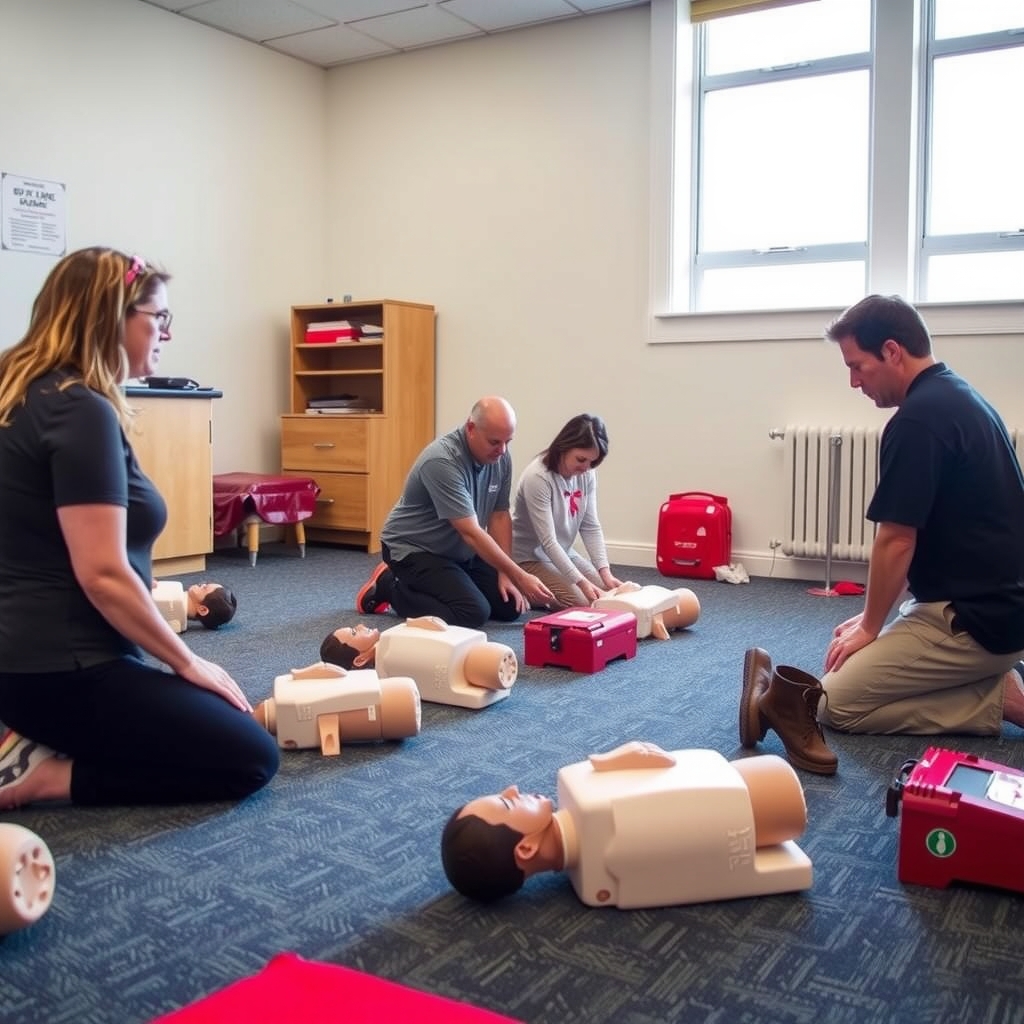
- Hands-on compression practice on adult, child and infant manikins. Current adult guidelines call for compressions at a rate of 100 to 120 per minute.
- AED practice using a training device, so you know what to expect from the voice prompts.
- Choking relief for adults, children and infants.
- Scenario practice, where you put the steps together as if responding to a real emergency.
- A skills check, and for some courses a short written test.
Wear comfortable clothes you can kneel in. CPR practice happens on the floor, and you'll be doing compressions for a couple of minutes at a time. If you have a knee, back or wrist concern, let your instructor know at the start. They can often help you find a position that works.
BLS classes move a bit faster and focus more on teamwork, since healthcare providers usually respond alongside others. Expect to practice two-rescuer CPR and bag-mask ventilation.
Ready to find a class?
Semper Paratus CPR offers CPR, BLS and first aid training for people across New Hampshire, Vermont, Massachusetts and southern Maine. See upcoming classes and register here to find a session that fits your schedule and your job requirements.
Keeping Your Certification Current
Most CPR, first aid and BLS cards are typically valid for two years. That can feel like a long time, but skills fade faster than most people expect if you don't use them. Guidelines also change from time to time, so renewal classes help you stay up to date.
A few habits make renewal easier:
- Set a reminder a couple of months before your card expires. Employers often won't let you work with an expired card.
- Keep a digital copy of your card where you can find it quickly.
- Don't wait for the last week. Popular class times can fill, especially when many coworkers renew around the same time.
For more detail on renewal timelines and what happens if your card lapses, read our guide on how often to renew CPR certification.
Questions to Ask Before You Book
A few minutes of checking can save you from retaking a class. Before you register, get clear answers to these questions:
- What course name does my employer or program require? CPR/AED, first aid, BLS, or a combination.
- Does it need to include a hands-on skills check? In most cases, the answer is yes.
- Is a specific certifying organization required? Match this to the course listing.
- Do I need adult, child and infant skills? Childcare and school roles usually do.
- When does my current card expire? If you are renewing, plan ahead so there's no gap.
If you are booking for a group of coworkers, ask your manager whether an on-site or group session might work better than sending people to separate classes. Reach out through our classes page to ask about options.
Why It Matters Close to Home
Cardiac emergencies don't only happen in hospitals. They happen at kitchen tables, youth hockey rinks, offices downtown, on hiking trails and during a long morning of shoveling after a New England snowstorm. In those first minutes before help arrives, the person standing nearby is the one who can start compressions and grab an AED.
That person is usually a family member, a coworker or a stranger who took a class. Getting certified is not just about checking a box for work. It means that if someone in your community collapses, you know what to do and you have practiced doing it.
Many people tell us they put off their first class because they worried they would freeze in a real emergency. Hands-on practice is the best answer to that worry. Repeating the steps out loud and on a manikin builds the kind of muscle memory that helps you act under stress.
Get Certified Near Concord
Whether you need BLS for a nursing job, CPR and first aid for a daycare position, or simply want peace of mind as a parent, the right class is out there. Confirm what you need, pick the format that fits your schedule, and show up ready to practice.
Semper Paratus means "always ready," and that's what we hope every student feels when they walk out of class. Browse our upcoming CPR, BLS and first aid classes and reserve your spot today.