If you're looking into CPR training for business in New England, start with three questions. Which course fits your workplace: CPR/AED, first aid or BLS? How many people need training to cover every shift and location? And how will you keep certifications current? This guide walks New Hampshire, Vermont, Massachusetts and southern Maine employers through each step so your team is ready to act when it counts.
Whether you run a ski shop, a dental office, a construction crew or a small nonprofit, the planning steps are the same. Some businesses train to meet a requirement. Others train because they want their people to feel confident helping a coworker, customer or neighbor.
Why CPR Training Matters for New England Workplaces
A cardiac emergency can happen anywhere: in a break room, on a job site, in a retail aisle or at a front desk. When it does, the minutes before emergency medical services arrive matter. Someone who knows how to start chest compressions and use an AED can make a real difference in that window.
New England has some features that make workplace readiness worth extra thought:
- Rural locations. Many businesses in Vermont, northern New Hampshire and parts of Maine are a long drive from the nearest hospital. EMS response can take longer in these areas than in a city center.
- Winter conditions. Snow, ice and cold add physical strain to outdoor work, and storms can slow emergency response.
- Seasonal staffing. Ski areas, summer camps, coastal restaurants and farms often bring on new staff each season, which means training has to keep pace with turnover.
- Small teams. In a shop with five employees, there may only be one or two people on site at a time. Each of them needs to know what to do.
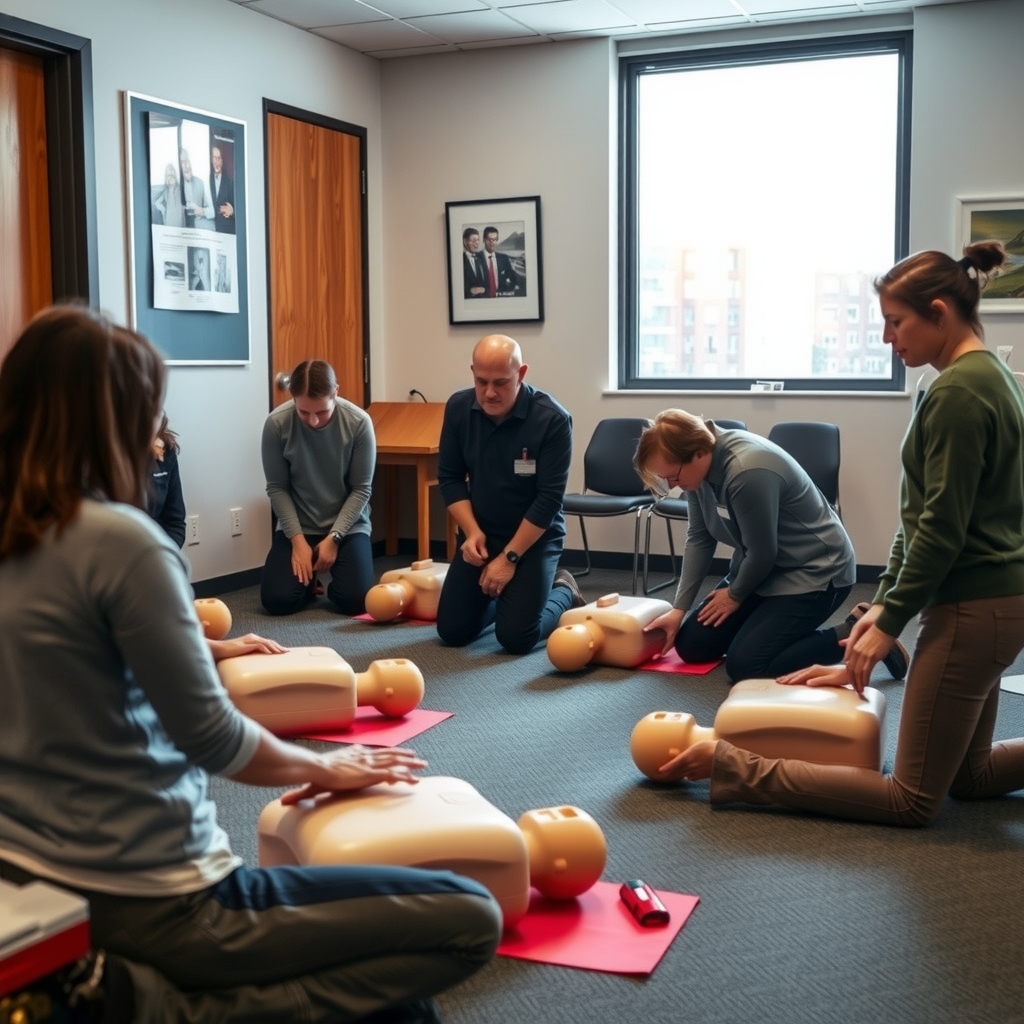
Training also builds something less measurable: calm. People who have practiced on a manikin and talked through a scenario tend to freeze less when something real happens.
What OSHA and Your Industry May Expect
Requirements vary by industry, so it's worth checking the rules that apply to your specific workplace rather than relying on a general rule of thumb.
At the federal level, OSHA's general industry standard on medical services and first aid (29 CFR 1910.151) says that when there is no infirmary, clinic or hospital in near proximity to the workplace, a person or persons should be adequately trained to render first aid. Some OSHA standards for specific industries and hazards go further and call out CPR directly.
Beyond OSHA, your requirements may come from:
- State licensing rules for fields like child care, health care, fitness and education
- Insurance carriers that ask about staff training
- Client or contract requirements, especially for contractors and vendors working on someone else's site
- Your own company policy, which can set a higher bar than the minimum
If you aren't sure what applies to you, your licensing agency, insurer or industry association is a good place to ask. Get the answer in writing when you can, including which certifying organization they expect, so you book the right course the first time.
Choosing the Right Course for Your Team
Not every employee needs the same class. Matching the course to the role keeps training relevant and avoids sending people to more than they need, or less.
| Course type | What it typically covers | Often a fit for |
|---|---|---|
| CPR/AED | Recognizing cardiac arrest, chest compressions, rescue breaths, using an AED | Offices, retail, hospitality, manufacturing, general staff |
| First aid | Bleeding control, burns, allergic reactions, choking, other common injuries and illnesses | Workplaces with physical tasks, outdoor work, remote sites |
| CPR/AED plus first aid | A combination of the two | Designated responders, supervisors, child care and fitness staff |
| BLS (Basic Life Support) | Team-based CPR, airway management and AED use at a health care level | Nurses, dental teams, EMS, medical office staff and other health care roles |
A few tips for choosing:
- Ask about pediatric content if your staff work with children. Many CPR courses include adult, child and infant skills, but confirm before you book.
- Think about your hazards. A machine shop and a law office have different risks. A course with first aid may fit better where cuts, burns or falls are more likely.
- Confirm what your industry accepts. Health care employers usually need BLS specifically, not a general CPR course.
Ready to see what's available? Browse our current CPR, BLS and first aid classes to find options that fit your team.
How to Plan CPR Training for Business in New England
Once you know which course you need, the next step is logistics. A little planning up front makes the training day go smoothly and keeps your coverage solid all year.
Map your coverage
List every location and every shift. Ask a simple question for each one: if someone collapsed right now, who here is trained? Aim to have trained people on every shift, at every site, including weekends and seasonal hours. Don't forget field crews, delivery drivers and anyone who works alone.
Pick your timing
New England seasons shape a lot of business calendars. A few ideas:
- Seasonal businesses often train during pre-season onboarding, before the rush starts.
- Year-round businesses may find late fall or early spring easier than the holiday season or peak summer.
- Winter storms can disrupt plans, so it helps to have a backup date in mind.
Decide who goes first
If you can't train everyone at once, start with supervisors, shift leads and anyone who regularly works alone or in remote spots. Then expand from there.
Communicate the why
Employees are more engaged when they understand the training is about protecting each other, not just checking a box. A short note explaining why you're offering it goes a long way.
Build Your Emergency Plan Around the Training
CPR skills work best inside a clear plan. After your team is trained, take some time to put the pieces together:
- Know where your AED is. If you have one, make sure everyone knows its location and that it's easy to reach. Check the pads and battery on a regular schedule.
- Post your address clearly. In rural areas especially, make sure staff can give a 911 dispatcher exact directions, including which door or building to use.
- Assign roles. Who calls 911? Who gets the AED? Who meets EMS at the entrance? Deciding ahead of time saves seconds.
- Stock first aid supplies. Keep kits where people work, and restock after use.
- Practice. A short walk-through a couple of times a year keeps the plan fresh, especially after staff changes.
This kind of plan doesn't need to be complicated. A one-page sheet near the AED or first aid kit can cover the basics.
Keep Certifications Current
CPR and BLS certifications don't last forever. Most cards have an expiration date, and skills fade when they aren't used. A simple tracking system helps you avoid a scramble when an inspection, audit or contract renewal comes up.
Some easy ways to stay on top of it:
- Keep a spreadsheet with each employee's course, card date and expiration date.
- Set calendar reminders a couple of months before cards expire.
- Group renewals together when you can, so several people refresh at the same time.
- Add CPR status to your onboarding checklist for new hires.
For more on timing, see our guide on how often to renew your CPR certification.
Getting Started With Semper Paratus CPR
Semper Paratus CPR serves workers and families across New Hampshire, Vermont, Massachusetts and southern Maine with CPR, BLS and first aid training. Our goal is simple: help people feel ready to step in when someone needs them.
If you're planning training for your business, here's a quick checklist to bring with you:
- Which course or courses your roles require
- How many people need training, and from which locations
- Any certifying organization your licensing agency, insurer or client expects
- Times of year that work best for your schedule
With those answers in hand, choosing a class is much easier. View our upcoming classes and take the next step toward a safer, more confident workplace. If you have questions about which course fits your team, reach out and we'll be glad to help you sort it out.